Help with an anus face mask?
Here is my question:
How do you make a mask for a character with a featureless face that allows the actor to breathe? I have been an amateur fx artist on and off for five years, doing fx for my friends' movies. I have made masks using methods outlined in Todd Debrecini's book on special makeup effects, but I must emphasize that I am an amateur, and when you read this you may say, "get out of town, you shouldn't be doing this, you're going to hurt someone." And yet people keep asking me to help them make their movies and I keep complying.
I live in chicago but am in New York for my friend's feature where I was supposed to be just doing minor fx, and someone else was supposed to create two masks for two characters whose faces turn into anuses from a spell by the devil. I ended up having to make these masks very last minute when the other artist fell through after shooting had started, two days before we were supposed to shoot the actors with the anus masks on.
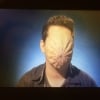
I have attached a picture (please do not share this, as it is part of our movie that is still in production and we want to keep it under wraps) of the masks. As you can see, the mask covers the actors' eyes, ears, and nose with smooth flesh, with the center of the anus landing between the actors' nose and mouth. We have already shot on two days with them, so we can't modify them all that much. I cut a hole in the center of the anus, and I poked many pinholes in the folds of the sphincter muscle. I made these masks by painting liquid latex (ArtMolds 407 mask making latex from Blick) into a gypsum stone mold of the sculpt of the anus faces that I made. I did a thin (1/8"?) layer of latex for the whole mask; it's basically a hollow shell, and its only points of contact on the actors' faces are the perimeter of the mask. Still, the actors can barely breathe through the airhole in the center of the mask and we have had to cut shooting short on both of the days we used them so far because the actors could only endure so much.
Do you have any ideas of how I can modify these masks to allow the actors to breathe while matching what we have already shot in wide and medium shots? I have only made masks from liquid latex before, but I am thinking foam latex would be a more porous material that would breathe better. I could pour this into the molds that I still have to make new masks. However I don't have an oven I can use to bake foam latex, as I hear it can't be a food oven. Do you have any suggestions on where to find an oven in New York City that I can use? Is it unheard of to make a mask like this, that covers the actors' nose and mouth?
Any advice is much appreciated.
Thank you very much,
Ben Gojer
(817) 994-9304
ben.gojer@gmail.com

ben.gojer@gmail.com
0
Comments
-
well....hmmm....anyhoo
put a breathing tube into one of the folds. snorkels are up to 14" for full air exchange. looks like youll need less than that.
2 -
Hi Ben,
Foam latex does breath, but not in terms of allowing enough air in for respiration. Foam "breathing" really means that over time it will allow some moisture to evaporate through it.
Here are a few questions for you- What type of shot coverage is remaining in your shoot?
- Do you have any input on how characters are lit, blocked out, or framed?
For example, if the shots are mostly downward angles for the rest of the shoot, you could cut out a small section by the chin to allow air in.
Or if all the shots feature the left side of the characters, the right side could have some ventilation added. You mentioned there are multiple characters. Perhaps have one for coverage that requires the left side of the face, and the other for coverage that requires the right side of the face. The side that is away from the camera can have a good amount of ventilation back towards the actors face (by the cheek/ear) that would even allow for 3/4 shots, but provide some good airflow.
Often on shoots there is a desire to preserve any props/effects, but it's important to keep in mind that their sole purpose is to get the shot. So don't be afraid to cut a big section away if it'll never be seen on camera. Just go over the shot list with the director and DP to make sure you can plan everything in a way that allows for such a modification, as there's no going back. (unless you have spares)
If you have your closeups out of the way, you could possibly add some thin slits in the sphincter wrinkles. Pinholes don't really do much for ventilation, as you need a good amount of airflow out to expel CO2 and in to bring in fresh air. Slits are usually better as they allow more airflow, and if matched carefully in the shadow area of a wrinkle they can become nearly invisible. Just keep in mind how it's being lit and shot. Lighting it to create harsher shadows will help hide the slits. And if you open things up too much you may want to use some black makeup on the actor inside the mask so nothing shows.
Another option would be to feed a small tube in on one side of the mask that is connected to a small fan or pump. This would create some positive pressure and airflow inside the mask, pushing CO2 and moisture out the hole in the front. Though there are 2 concerns with this. 1: If the fan/pump fails it will not be effective, so you need a contingency plan, and 2: the pressure could potentially deform the mask or pop seams if it is too great. Sound and mobility could also be an issue if they are tethered or the fan/pump produces too much noise. Find out if you can go MOS for those shots.
My suggestion is to work with the DP and director to plan out shots in a way that you can light, block, and frame the character to hide some more aggressive ventilation. Relying on a single hole and a few pinholes just can't provide enough air, and your actor is likely to get Respiratory Acidosis (too much CO2 building up in the blood) or more than likely, Hypoxia (too little O2 in the blood)
Watch your actors for the following symptoms: Confusions, dizziness, feeling light headed, coughing, rapid breathing, shortness of breath, wheezing, headache. Sweating is also a sign, but on set everyone is sweating.
Check in on them frequently, and don't be afraid to stop filming if they show any of those symptoms. And a trip to the ER might be in order, as blood O2 will need to be monitored and O2 administered. It's always best to plan things so there is no risk, and no production is worth risking someone's health or safety.
Nothing is more important than safety.
Best of luck!
/Chris
1 -
Thank you very much for the advice, Anthony and Chris. I'm sorry I didn't follow up sooner.I added slits in the sphincter wrinkles, and this did help with the actors' breathing. I also coordinated with the director and DP on the actors' blocking. We just left the right side of the mask open while we shot the character's left profile, and vice versa. Then we closed it up all the way for only one closeup shot that was straight on.Another thing we did was have a safety meeting with the whole crew at the beginning of the big mask day, and I explained how difficult it was for the actors to breathe while the masks were fully applied. We got everyone to work as a team to take great care of the actors and keep their heart rates down.Thank you for emphasizing to me the importance of safety. In my experience, it's easy to feel pressured to take shortcuts and put stress on yourself and/or your actors when you're on set. But obviously safety is always of paramount importance. We wrapped and luckily everything went well and no one was hurt.0
-
UPDATE: This film is called "Assholes" and premiered at SXSW in 2017 and won the 1st annual Adam Yaubach Hornblower Award. It is available to stream on Amazon Prime Video.0
-
Nice Ben, and congrats!
/Chris0


Categories
- All Categories
- 97 CURRENT CONTEST
- 97 2025 Halloween Costume Contest
- 1.3K COMMUNITY
- 1K General
- 62 Tutorial Reviews
- 98 Suggestions and FAQ
- 82 Job Listings
- 40 Artists for Hire
- 1.8K CHARACTER CREATION
- 165 Costumes & Cosplay
- 148 Lab work
- 95 Props
- 152 Puppets
- 36 Stop Motion
- 18 VFX
- 39 Student Projects
- 478 Sculpture
- 159 Fabrication
- 160 Animatronics
- 177 Makeup Effects
- 130 Painting
- 29 Traditional/Digital Design
- 8.1K PAST CONTESTS
- 244 Creature Making Contest 2025
- 100 2024 Halloween Costume Contest
- 198 Character Making Contest 2024
- 343 Creature Making Contest 2024
- 131 2023 Halloween Costume Contest
- 168 Monster Making Contest 2023
- 239 Creature Making Contest 2023
- 117 2022 Halloween Costume Contest
- 309 Character Sculpting Contest 2022
- 133 Character Makeup Contest 2022
- 170 2021 Halloween Costume Contest
- 261 Creature Sculpting Contest 2021
- 209 Character Makeup Contest 2021
- 354 Creature Making Contest
- 200 2020 Halloween Costume Contest
- 203 Monster Makeup Contest
- 372 Creature Painting Contest
- 244 Horror Character Contest
- 182 2019 Halloween Costume Contest
- 260 Character Makeup Contest 2019
- 351 Character Sculpting Contest
- 279 2018 Halloween Costume Contest
- 292 Alien Art Contest 2018
- 251 Character Makeup Contest
- 389 Monster Making Contest
- 167 2017 Halloween Costume Contest
- 153 Heroes & Villains Contest
- 221 Cosplay Contest
- 215 Creature Sculpting Contest
- 107 Puppet Contest
- 161 Alien Art Contest
- 98 Halloween Costume Contest
- 149 Robot Art Contest
- 269 Dino Art Contest
- 592 Creature Contest
- 5 ALUMNI
- 275 ON DEMAND WEBCOURSES
- 1 Hand Puppet Detail and Finishing Techniques
- 24 Animation for Animatronics
- 9 How To Make a Mask - Wearable Dynamic Art
- 11 3-Axis Robotic Mechanisms
- 5 Neck Mechanisms
- 24 How To Make a Monster Suit with Bill Bryan & Ted Haines
- 19 Character Animatronics
- 5 How to Sculpt a Dinosaur
- 5 How To Build An Animatronic Head
- 5 Creature Costume Basics
- 4 Puppet Mechanism Basics
- 1 Tattoo Makeup - Cover, Create, & Apply
- 2 How To Make Horror Props
- 1 The Fine Art of Horror Painting
- 1 Fantasy Maquette Sculpting In CX5(S)
- 14 The Business of Making Monsters
- Production Design - The Process Of Creating A World For Film
- 4 Character Makeup - Multi-Piece Prosthetic Application
- 3 Prosthetic Makeup Basics - Gelatin Facial Appliances
- 5 Stop Motion Animation with the Chiodo Bros.
- 11 Blood, Gore and Makeup Effects
- 7 How to Punch Hair - Hairwork for Silicone Characters
- 3 Bodycasting on a Budget with Ted Haines
- 2 Portrait Illustration with Terry Wolfinger
- 5 Mastering Marionettes - Design, Construction & Performance with Scott Land
- 1 Creature Makeup - Multi-piece silicone prosthetic application
- 12 Muscle Suit Fabrication
- 11 Wig & Hair Basics
- 4 Silicone Prosthetic Transfer Appliances
- 3 Building Miniatures: Small-Scale Model Making - Part 5
- 9 Toy Design & Sculpture for Action Figures & Collectibles
- 1 Building Miniatures: Small-Scale Model Making - Part 4
- 2 Human Head Anatomy & Sculpture
- 1 How to Make a Foam Puppet - Part 3
- 1 Building Miniatures: Small-Scale Model Making - Part 3
- 5 How to Make a Foam Puppet - Part 2
- 3 How To Make a Foam Puppet - Part 1
- 1 Building Miniatures: Small-Scale Model Making - Part 2
- 14 Animatronic Control Systems - Arduino Programming Basics with David Covarrubias
- 3 Building Miniatures: Small-Scale Model Making - Part 1
- 3 Advanced Creature Teeth: Prosthetic Dental Appliances - Part 2
- 1 3D Pumpkin Carving - How to Carve a Pumpkin from the Outside In
- 5 How To Make A Latex Rubber Mask Part 3
- 3 Advanced Creature Teeth - Part 1
- 11 How To Make A Latex Rubber Mask Part 2
- 6 How To Make A Latex Rubber Mask Part 1
- 294 PAST LIVE WEBCOURSES
- 11 Monster Sculpting
- 8 Platinum Silicone Mask Painting
- 5 Feather Work: Puppets, Costumes, Hair & Makeup
- 9 How To Make Eyes For Puppets, Masks, & Makeups
- Working with Wigs - Wig & Hair Basics with Connie Grayson Criswell
- 14 Muscle Suit Fabrication with Ted Haines
- 7 Homework - Muscle Suit Fabrication with Ted Haines
- 13 Toy Design & Sculpture for Action Figures & Collectibles with Sandy Collora
- 10 Homework - Toy Design & Sculpture for Action Figures & Collectibles with Sandy Collora
- 13 Human Head Anatomy & Sculpture with Jordu Schell
- 11 Homework - Human Head Anatomy & Sculpture with Jordu Schell
- 18 Mastering Marionettes - Design, Construction & Performance with Scott Land
- 13 Homework - Mastering Marionettes - Design, Construction & Performance with Scott Land
- 16 Puppet Mechanism Basics - Eyes, Brows & Ears with BJ Guyer - Watch & Chat
- 11 Homework - Puppet Mechanism Basics - Eyes, Brows & Ears with BJ Guyer
- 12 Advanced Creature Teeth -- with John Cherevka
- 3 On Camera Hand Puppet Performance
- 9 Silicone Prosthetic Transfer Appliances - Age Makeup with Neill Gorton
- 3 Practical Magic: The Art of In-Camera Visual Effects with Joey Shanks
- 9 Buisness of Making Monsters with Shannon Shea
- 11 Stop Motion Animation with the Chiodo Bros
- 5 Foam Carving Puppets with BJ Guyer
- 3 3D Pumpkin Carving with Andy Bergholtz
- 4 Prosthetic Makeup Basics with Rob Burman
- 13 How to Make a Latex Mask with Tim Martin
- 2 Character Illustration with Terry Wolfinger
- 3 Halloween Costumes - Fabric Effects with Dawn Dininger and Amy Whetsel
- 9 Blood, Makeup & Gore FX with Gary J. Tunnicliffe
- 13 Hand Puppet Design and Fabrication with BJ Guyer
- 3 How to Sculpt a Dinosaur with Christopher Darga
- 2 Airbrush FX: Beginning to Advanced with Craig Fraser
- 1 Female Figure Sculpting in Cx5 wtih Adam Beane
- 3 Creature Design: Maquette Sculpting with Casey Love
- 3 How to Make a Sci Fi Helmet with Fon Davis
- 2 Hyper Realistic Silicone Painting with Tim Gore
- 2 Josh Herman Zbrush Creature Sculpting
- 13 Textures and Forms with Don Lanning Oct 26, 2013
- 9 Character Rendering in Photoshop with Dan LuVisi
- 2 Creature Maquette Painting with Jordu Schell
- 24 Textures and Forms with Don Lanning May 04, 2013
- 3 Tattoo Makeup A-to-Z: Cover, Create, and Apply with Christien Tinsley
- 11 Creature Design w/ Casey Love - Sculpting
- 7 Creature Design With Casey Love - Translucent Creature Painting
- 3 Creature Maquette Sculpting with Jordu Schell